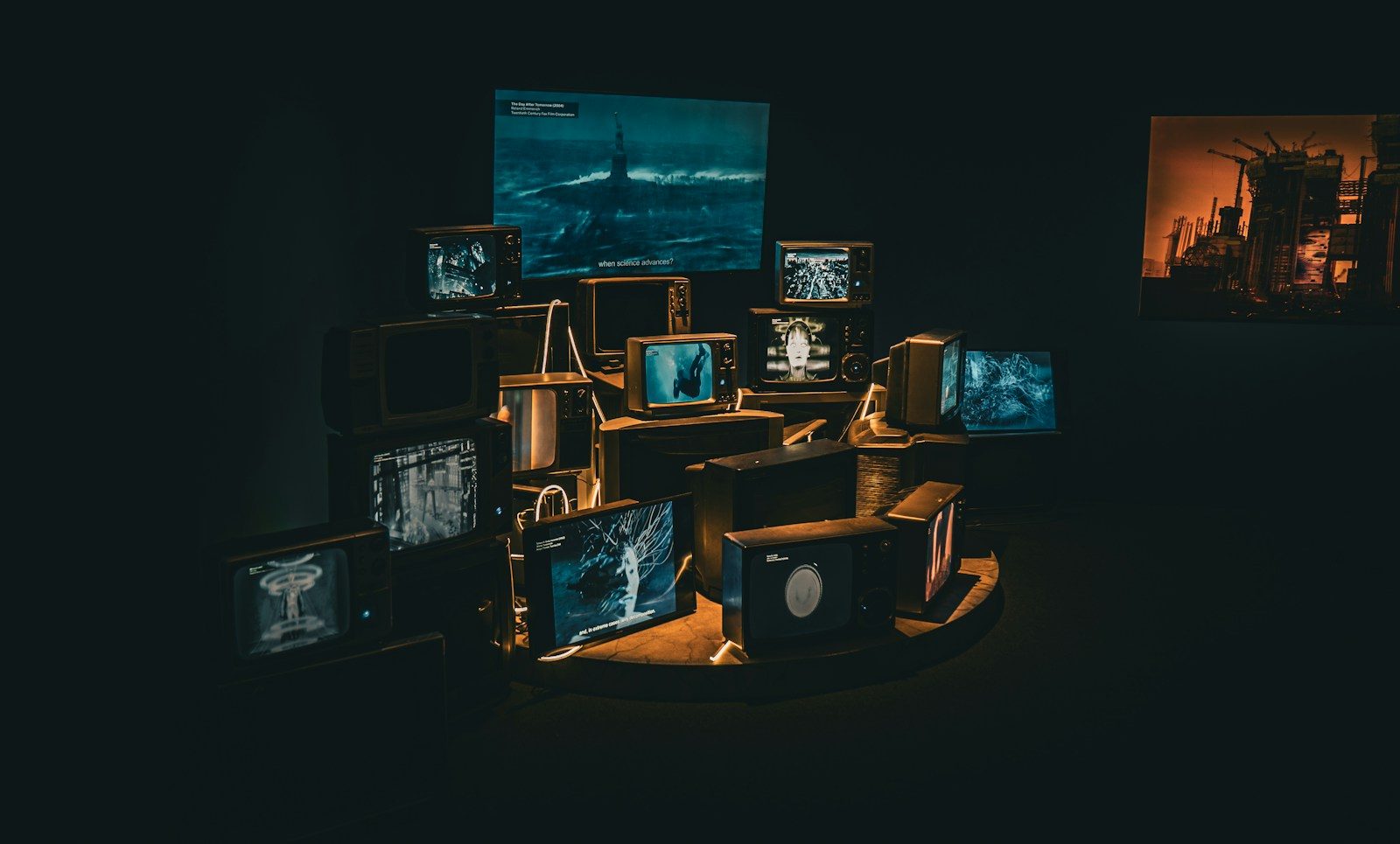
Art has never stood still, but over the last few years, its evolution has broken all speed records. Today, the boundaries between the physical and digital worlds have practically blurred.
Neural networks paint canvases, augmented reality (AR) brings museum exhibits to life, and digital art sells at prestigious auctions for millions of dollars.
What does all of this mean for contemporary artists, and how is it transforming our visual culture? Let’s dive into the major trends shaping the art market right now.
The rise of generative AI art has sparked fierce debate. Platforms like Midjourney and Stable Diffusion can generate stunning images in seconds. But can this truly be considered art?
Most contemporary curators agree: AI is not a replacement for human creators, but rather a powerful new tool.
• The New Canvas: Artists use algorithms to generate wild concepts, which they later translate onto physical canvases or incorporate into large-scale installations.
• Conceptualism: In an era where a computer can handle technical execution in a split second, the idea and the meaning infused by the artist matter more than ever.
The term “phygital” (physical + digital) has become a buzzword in modern exhibition design. Galleries are no longer limited to white walls and wooden frames.
• Immersive Experiences: 360-degree multimedia projections paired with atmospheric soundtracks—like the massively popular touring Van Gogh or Klimt shows—draw millions of visitors worldwide.
• Interactivity: Using smartphones and AR technology, exhibition-goers can look “inside” a painting, witness the creation process, or uncover hidden layers intended by the author.
In the past, trends were dictated solely by major museums and authoritative critics. Today, visual culture is largely shaped by platforms like Instagram, TikTok, and Pinterest.
• The Aesthetics of the Moment: Art has become more accessible and dynamic. Artists share behind-the-scenes processes through art vlogs and speedpaints, turning the act of creation itself into a performance.
• Going Viral: Thanks to social media algorithms, a painting or art object can become a global sensation overnight, bypassing traditional gallery gatekeepers entirely.
One might think that in a world of 3D graphics and virtual reality, traditional painting and sculpture would fade into the background. However, the exact opposite is happening.
The more digital content surrounds us, the more we value tactility and uniqueness. The heavy texture of oil paint on a canvas, the raw feel of fired clay, and the imperfect lines drawn by a human hand are becoming elite, highly sought-after luxuries. Traditional art isn’t dying; it is being recontextualized through a modern lens.
Modern art is a living organism that instantly absorbs the zeitgeist. Technology isn’t destroying classical standards—it’s giving artists a superpower to express their ideas in entirely new ways. We are living in an exciting era of visual diversity, where there is room for every voice to be heard.

21 запросов за 0.059 секунд.